
5 Facts You Should Know About HIPAA Compliance
HIPAA is best known for protecting patient information while healthcare laptops, servers, and workstations are actively in use. But what happens when a device containing that information reaches the end of its useful life?
Here are 5 things to know about HIPAA requirements for secure device retirement.
01. HIPAA applies to the data and the device on which it’s stored.
HIPAA requires healthcare organizations to have policies for both the final disposition of patient information and the equipment or electronic media where it is stored. Before electronic media is reused, electronic Protected Health Information (ePHI) must be removed.¹
02. Protection extends beyond laptops and servers
HIPAA’s device and media requirements can apply to any equipment that stores ePHI. That can include copiers and multifunction printers, medical equipment, workstations, servers, removable media, and other devices with storage.
03. HIPAA doesn’t require one specific destruction method
HIPAA does not prescribe a single technology or method for destroying electronic media. Instead, organizations must use appropriate safeguards to protect information from unauthorized access or disclosure depending on the circumstances of use. That may involve clearing, purging, or destroying the media.³
For more detailed guidance, NIST SP 800-88 Rev. 2 provides recommendations for selecting sanitization methods based on the type of media and the sensitivity of the information.⁴
04. Data destruction needs documentation
Destroying or sanitizing data is only part of the process. Healthcare organizations also need to be able to show how the device was handled, how the data was removed, and how the equipment was ultimately disposed of.
Good documentation creates a clear record of the device’s journey from retirement through final disposition.
05. Your ITAD partner is part of the process
When a healthcare organization uses a third party to handle equipment containing ePHI, HIPAA’s business associate requirements may apply. A Business Associate Agreement (BAA) establishes the vendor’s responsibilities for protecting that information.⁵
That makes your ITAD provider part of the chain of responsibility for protecting data during device retirement.
A strong ITAD program provides a traceable, documented process, accounting for each asset, tracking its chain of custody, and documenting how the data was sanitized or destroyed.
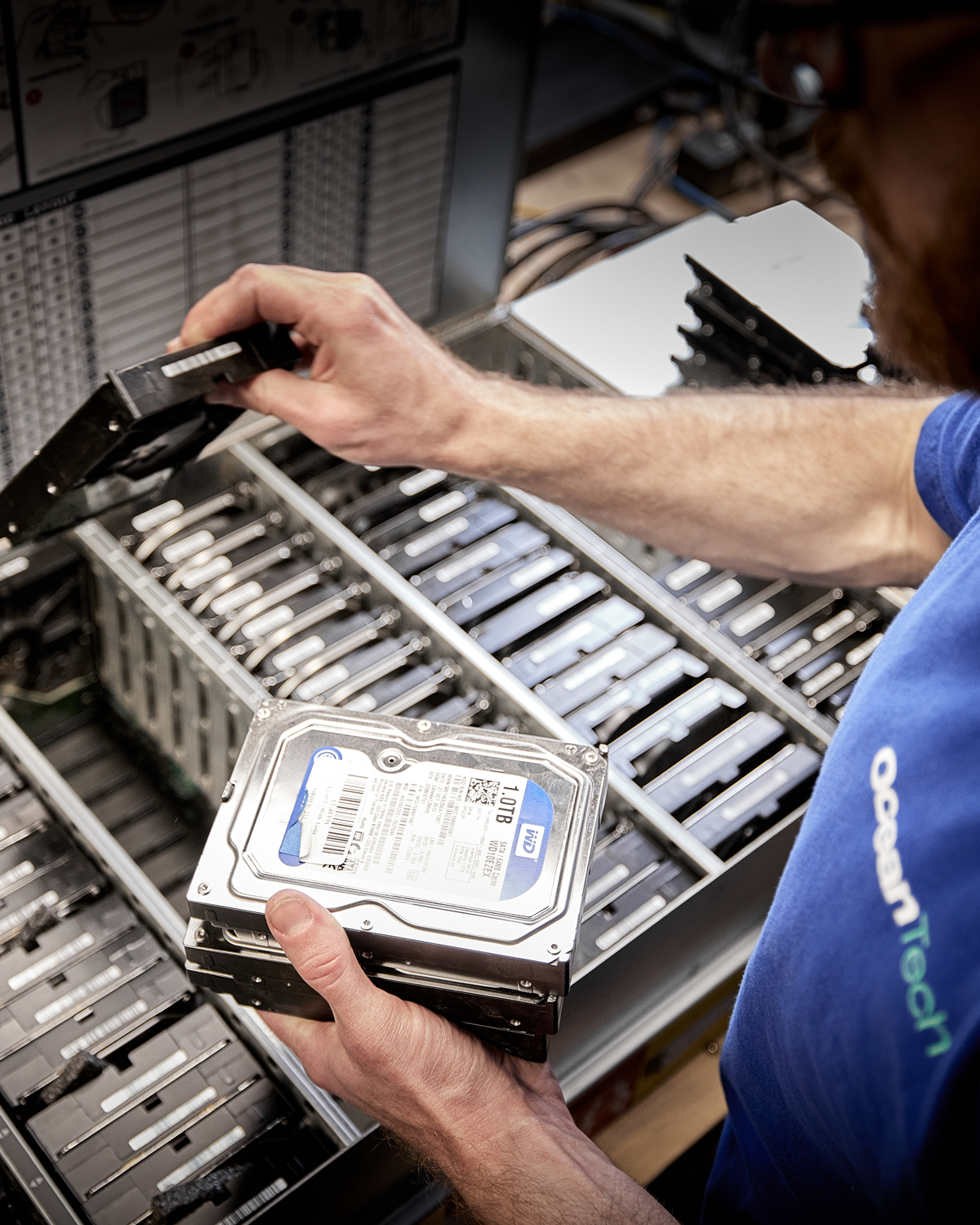
Protecting Data Through Retirement
OceanTech provides HIPAA-compliant ITAD services backed by R2v3 and NAID certifications, helping healthcare organizations securely retire technology while protecting sensitive patient information. Through certified data destruction, asset tracking, complete chain-of-custody documentation and audit-ready reporting, we provide a clear record of what happens to every device.